
Key Takeaways
- 01Overhead rate = total overhead costs ÷ total sales × 100. A shop with $50,000 in monthly overhead and $100,000 in monthly sales has a 50% overhead rate.
- 02Overhead includes every cost of staying in business that isn't tied to a specific job — rent, insurance, office staff, software — but not job materials or field labor.
- 03Overhead costs fall into three types: fixed (rent), variable (advertising), and semi-variable (utilities, overtime).
- 04If you don't build overhead into every estimate, jobs that look profitable on paper quietly lose money.
- 05You can't eliminate overhead, but reviewing it regularly and cutting non-essentials directly raises your profit margin.
To calculate your overhead cost, add up every business expense that isn't tied to a specific job — rent, insurance, vehicle payments, office staff, software — then divide that total by your sales for the same period and multiply by 100. That gives you your overhead rate: the share of every dollar you earn that goes to just keeping the doors open. According to the Bureau of Labor Statistics, roughly 1 in 5 new businesses fail within their first year and about half within five years — and unmanaged overhead and the cash flow problems it causes are a common culprit. You'll never eliminate overhead entirely, but once you know your number, you can cut the expenses that aren't earning their keep and price every job so overhead is covered before profit is counted.
What Are Overhead Costs?
Overhead costs, also known as recurring expenses, keep your business running but do not add to revenue. These expenses are frequently referred to as indirect costs because they are not part of business operations that generate revenue and boost net profit. Overhead costs are categorized into three types: fixed overhead costs, variable overhead costs, and semi-variable overhead costs.
1. Fixed overhead costs
Fixed overhead expenses remain constant every month. Here are some examples:
- Payments for rent or mortgage
- Insurance premiums
- Taxes on real estate
- Software subscriptions and license fees
2. Variable overhead costs
Business operations influence variable overhead costs. These types of overhead costs rise in accordance with increased business operations. Variable overhead expenses include the following:
- Shipping
- Materials
- Advertising
- Maintenance of office equipment
3. Semi-variable overhead costs
Semi-variable overhead costs vary significantly from month to month based on usage. These are some examples of overhead costs:
- Utility bills
- Salaries (including overtime)
- Business vehicle usage
- Maintenance and repairs of tools and equipment
When calculating overhead costs, these categories become less significant. However, understanding the differences is critical to the functioning of your organization.
Importance of overhead costs
Based on your business operations, overhead expenses make up a big amount of dollars bills that you spend every month. Understanding and managing them properly might play a crucial part and make a difference in your company's profit and loss.
Now that you know what overhead costs are and why they are significant, let's move on to understanding how to calculate and reduce them.
How to Calculate Overhead Cost?
To determine your overhead costs, follow the steps discussed below:
Review last year's financial statements
The fastest way to separate direct costs from indirect costs is to look at last year's financials. Pull up your income statement and balance sheet (or the expense categories the IRS uses on Schedule C) and you'll see both your monthly and annual indirect expenses. Work from the monthly numbers where you can, since most overhead — insurance, gas, electricity, software subscriptions — is billed monthly and you'll be allocating it to jobs on a monthly basis.
List all the expenses and check for any amendments
After getting a clear idea, make a detailed list of indirect business expenses such as rent, utilities, taxes, office equipment, etc. These expenses are your overhead costs. Overhead costs do not include direct costs associated with producing the work — field labor and job materials belong in the job's direct costs, not overhead. Remember that the line depends on your business: fuel is overhead for an accountant but a direct cost for a hauling company. Categorize each expense by asking whether it disappears when a specific job disappears — if it doesn't, it's overhead.
Sum up all the expenses
Add all the monthly overhead costs to find the total overhead costs. This is the amount of money required to run your business every month.
Calculate overhead costs
Now, after identifying the total overhead costs, it's time to determine the overhead rate. Since the overhead costs are not directly proportional to the sales revenue you generate, it becomes difficult to calculate the monthly overhead cost. However, when you calculate the proportion of actual overhead costs compared to monthly sales, you will get the idea.

Overhead Percentage Rate = Total overhead cost for the period / Total Sales for the period × 100
Suppose that your monthly overhead expense is $50,000 and your monthly sales revenue amounts to $100,000. Then your overhead rate will be:
Overhead Percentage Rate = $50,000 × 100 / $100,000 = 50%
For a service business, it also helps to know your overhead cost per billable hour, so you can build it into every estimate. Divide monthly overhead by the billable hours your crew actually works — not the hours they're on the clock.
Say your two-person electrical shop carries $6,400/month in overhead (shop rent, truck payments, insurance, phone, software, advertising). Between service calls, drive time, and paperwork, the two of you bill about 240 hours a month. Your overhead cost is $6,400 ÷ 240 = $26.67 per billable hour — that amount has to be recovered on top of labor and materials in every quote before you earn a dime of profit. A markup calculator makes it easy to layer overhead and profit onto your direct costs.
Why Are Reducing Overhead Costs Important?
Overhead never contributes to generating sales — that's why it's called an indirect cost. Every dollar you trim from it, though, drops straight to your bottom line: cutting $500/month in overhead has the same effect on profit margin as winning roughly $1,000/month in new revenue at a 50% gross margin, without doing a single extra job.
When you cannot remove the indirect costs, you can surely cut the non-essential indirect expenses by following certain techniques.
Ways to Reduce Overhead Costs
1. Hire an accountant or bookkeeper

An accountant or bookkeeper will categorize your expenses correctly, catch deductions you'd miss, and prevent the financial mistakes that cost far more than their fee. If you're not ready to hire one, at least get your small business accounting basics in order so your overhead numbers are trustworthy.
2. Have a Deep Dive into your Overhead Costs
Review your overhead costs at regular intervals — quarterly works for most small businesses. Each review, sort every indirect expense into "essential" and "not earning its keep": the second list is where subscriptions you forgot about, redundant insurance riders, and underused equipment leases hide, and eliminating them reduces your total overhead cost without touching operations.
3. Trim the Staff Count
Downsizing is often a preferred alternative, particularly if you've discovered that you can lower the number of employees without affecting productivity or efficiency.
4. Outsource Few Duties
It is not always important to find everything in-house. Specific responsibilities can be outsourced to help you replace staff shortages without needing to pay full-time compensation. It also means you'll save money on office supplies and other overhead costs.
5. Right-size your software and equipment
Instead of buying pricey software suites or the latest equipment models, purchase licenses only for the employees who need them, and question every renewal. If you're in construction or the trades, there are more ideas for cutting shop and equipment overhead specific to your world.
6. Go Green
If you're not careful, your utility expenses can quickly add up.

Going for more sustainable alternatives such as LED bulbs and energy-saving power outlets may have a higher initial cost, but they will result in cheaper utility bills in the long run.
7. Go Paperless
Stop paying for printing, paper, ink, and postage. Digital estimates and invoices cost nothing to send, can't get lost in a truck cab, and get to your customer the moment the job is done.
Willing to Create Accurate Cost Invoices/Estimates?
Ever thought of going completely paperless? InvoiceOwl helps you create unique invoices and estimates swiftly, saving you time and overhead costs.
Start Your FREE TrialFrequently Asked Questions
The overhead absorption rate is how much overhead you assign to each unit of work — typically per direct labor hour or machine hour. Overhead absorption is used mainly for external financial reporting rather than day-to-day management. The formula is: Overhead absorption rate = Total overhead ÷ Total direct labor hours. For example, $8,000 of monthly overhead spread over 400 labor hours means each hour of work must absorb $20 of overhead.
Those costs which are not directly related to the production activity and do not contribute to the revenue-generating activities are known as overhead costs. Examples of overhead costs are utilities payable, rent payable, insurance payable, office supplies, and salaries payable to office staff.
There's no single ideal number — it depends on your industry, company size, and how much of your work happens in the field versus an office. As rough guides often cited by accountants: many trade and service businesses land somewhere between 10% and 30% of sales, while professional service firms with expensive office space and staff can run considerably higher. What matters more than hitting a benchmark is knowing your own rate, tracking it over time, and making sure every estimate you send recovers it.
Follow these steps to determine the overhead rate per employee:
- Calculate the fully loaded labor cost — not just hourly pay but also medical benefits, paid holidays, payroll taxes, and retirement contributions
- Calculate your total business overhead for the period
- Divide that overhead by the total billable hours across your crew. If your company employs five technicians billing 160 hours each per month, split the monthly overhead across those 800 hours
- Add the overhead per hour to the loaded labor cost per hour — that sum is the true cost of putting that employee on a job for an hour, and your billing rate has to sit above it
Knowing this number lets you price competitively without accidentally billing below your own cost.
Scale Your Business with InvoiceOwl!
Now that you know how to calculate your overhead costs, make it a habit: total them monthly, track your overhead rate over time, and build the number into every estimate you send. Overhead can't be eradicated fully — some of it is simply the cost of being in business — but knowing your rate is the difference between jobs that look profitable and jobs that actually are. Software like InvoiceOwl streamlines your estimating and invoicing with automation, helping you save the time and paperwork costs that quietly pad your overhead. Start your free trial today and see the difference for yourself.
Related Resources
Are estimates free? Know When Can You Charge for Estimates
Are you stuck between deciding whether to offer free estimates or charging a fee for them? Here are the general guidelines for charging for estimates.
Read more
Can You Charge for an Estimate as a Contractor?
Complex projects involving detailed designs and multiple revisions may incur some charges for estimates. Learn when to charge for an estimate as a contractor.
Read more
A Complete Guide on How to Bid on Plumbing Jobs
Want to know how to bid on plumbing jobs in a professional way? Learn how specific plumbing jobs differ and how to calculate pricing in seconds.
Read more
Tips on How to do a Fence Estimate Professionally
Are you a contractor hired to erect a privacy fence or commercial fence? Here's all you need to know on how to estimate a fencing job accurately for profit.
Read moreFree Quotation Template
Use InvoiceOwl free templates to generate instant quotes. Download the required industry-specific free price quote template, feed the necessary details in it, save the document, and then email it to the clients.
Read more
Breaking Down the Invoice Quote Process
Get a comprehensive guide about what a quote and invoice is, what is the invoice quote process, and why you need to pay the charges.
Read more
15 Best Flooring Estimating Software: Complete Guide
Compare the top 15 flooring estimating software solutions. Detailed reviews, pricing, and features to help contractors make informed decisions.
Read more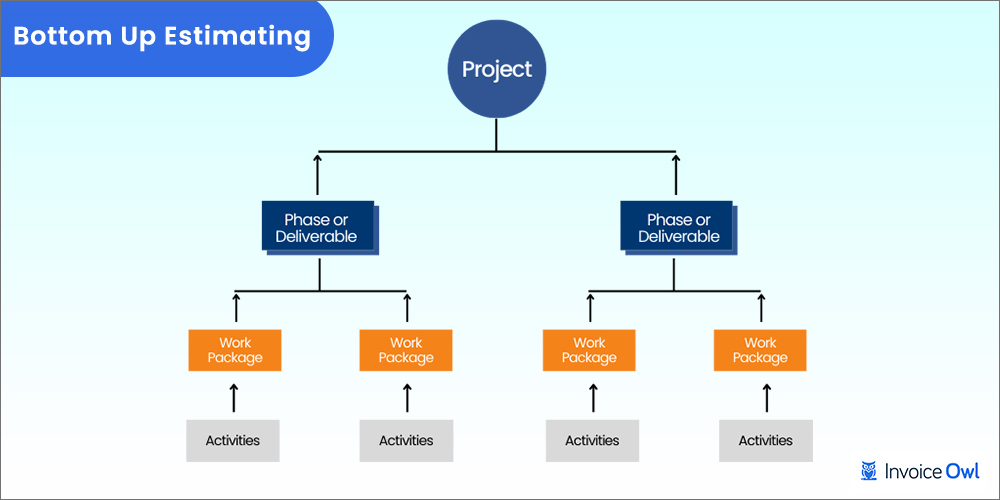
Bottom Up Estimating - Reasons To Adopt BottomUp Estimating Technique
If you are struggling to estimate accurate costs for your project, Bottom Up estimating is the solution to your problems. Read this blog to know more about bottom-up estimating techniques, and create precise estimates.
Read moreAre estimates free? Know When Can You Charge for Estimates
Are you stuck between deciding whether to offer free estimates or charging a fee for them? Here are the general guidelines for charging for estimates.
Read moreCan You Charge for an Estimate as a Contractor?
Complex projects involving detailed designs and multiple revisions may incur some charges for estimates. Learn when to charge for an estimate as a contractor.
Read moreA Complete Guide on How to Bid on Plumbing Jobs
Want to know how to bid on plumbing jobs in a professional way? Learn how specific plumbing jobs differ and how to calculate pricing in seconds.
Read moreTips on How to do a Fence Estimate Professionally
Are you a contractor hired to erect a privacy fence or commercial fence? Here's all you need to know on how to estimate a fencing job accurately for profit.
Read moreFree Quotation Template
Use InvoiceOwl free templates to generate instant quotes. Download the required industry-specific free price quote template, feed the necessary details in it, save the document, and then email it to the clients.
Read moreBreaking Down the Invoice Quote Process
Get a comprehensive guide about what a quote and invoice is, what is the invoice quote process, and why you need to pay the charges.
Read more15 Best Flooring Estimating Software: Complete Guide
Compare the top 15 flooring estimating software solutions. Detailed reviews, pricing, and features to help contractors make informed decisions.
Read moreBottom Up Estimating - Reasons To Adopt BottomUp Estimating Technique
If you are struggling to estimate accurate costs for your project, Bottom Up estimating is the solution to your problems. Read this blog to know more about bottom-up estimating techniques, and create precise estimates.
Read moreAre estimates free? Know When Can You Charge for Estimates
Are you stuck between deciding whether to offer free estimates or charging a fee for them? Here are the general guidelines for charging for estimates.
Read moreCan You Charge for an Estimate as a Contractor?
Complex projects involving detailed designs and multiple revisions may incur some charges for estimates. Learn when to charge for an estimate as a contractor.
Read moreA Complete Guide on How to Bid on Plumbing Jobs
Want to know how to bid on plumbing jobs in a professional way? Learn how specific plumbing jobs differ and how to calculate pricing in seconds.
Read moreTips on How to do a Fence Estimate Professionally
Are you a contractor hired to erect a privacy fence or commercial fence? Here's all you need to know on how to estimate a fencing job accurately for profit.
Read moreFree Quotation Template
Use InvoiceOwl free templates to generate instant quotes. Download the required industry-specific free price quote template, feed the necessary details in it, save the document, and then email it to the clients.
Read moreBreaking Down the Invoice Quote Process
Get a comprehensive guide about what a quote and invoice is, what is the invoice quote process, and why you need to pay the charges.
Read more15 Best Flooring Estimating Software: Complete Guide
Compare the top 15 flooring estimating software solutions. Detailed reviews, pricing, and features to help contractors make informed decisions.
Read moreBottom Up Estimating - Reasons To Adopt BottomUp Estimating Technique
If you are struggling to estimate accurate costs for your project, Bottom Up estimating is the solution to your problems. Read this blog to know more about bottom-up estimating techniques, and create precise estimates.
Read more